OVERVIEW: OBJECTIVES & SCOPE
Demo #4 is the SINNOGENES project demonstration site at Sanddorn GmbH, a sea-buckthorn berry processing plant in the Herzberg district of Brandenburg, Germany. Prior to the project, the facility relied almost entirely on fossil energy: a gas boiler for heat and a small 55 kWp photovoltaic (PV) system, giving a renewable energy share of just 13.82 %.
The primary objective of Demo #4 is the complete decarbonization of the plant’s energy supply. This is achieved through:
- Design and installation of an integrated renewable energy system (PV, STC, HP, TES, battery)
- Coupled design and operation optimization using the DLR-developed CoDeOpT tool
- Real-time automated control and monitoring using the CoDeOpT tool via the SINNO-Middleware
- Validation against three KPIs: renewable share, energy cost savings, and return on investment
- Knowledge transfer to regional industries via HLUC7 (paper, bakery, aluminium sectors)
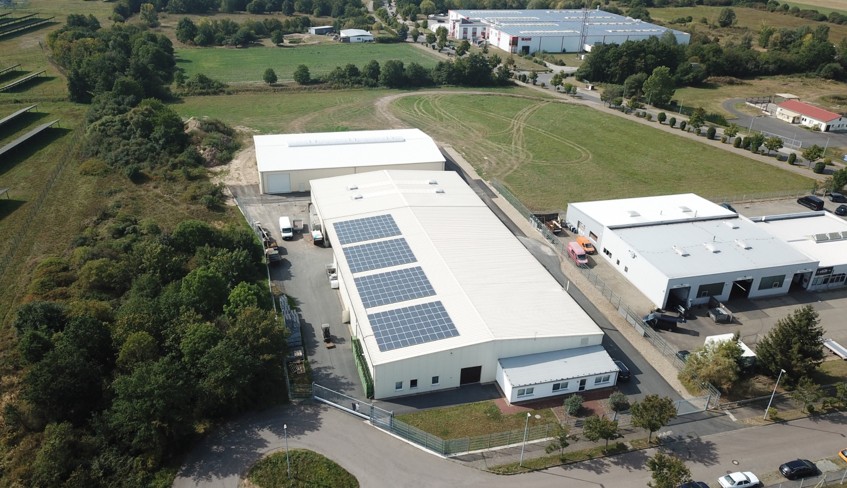
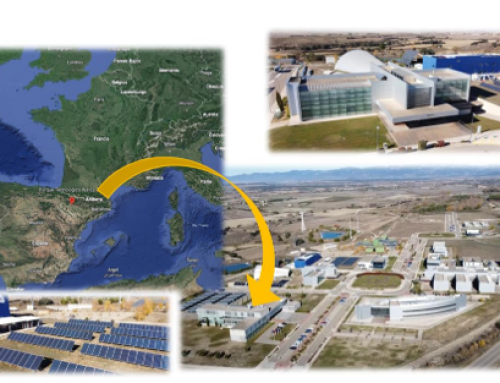
Sanddorn GmbH in Herzberg, Germany
EU Project Context
SINNOGENES (Storage INNovations for Green ENErgy Systems) is a Horizon Europe project (Grant No. 101096992) with five demonstration sites across Europe. Demo #4 in Germany is led by DLR (German Aerospace Center) in partnership with Sanddorn GmbH, and focuses on industrial decarbonization through smart integration of renewable energy and advanced optimization tools.
KEY RESULTS & ACHIEVEMENTS TO DATE
All three KPIs defined for Demo #4 have been exceeded in simulation, and initial real-world validation from March 2026 confirms strong alignment with expected performance.
| KPI 4.1 — Renewable Share | KPI 4.2 — Cost Savings | KPI 4.3 — Return on Investment |
| 100 %
Renewable energy in total supply Target: >90% ✓ EXCEEDED |
46,810 €
Expected savings per year Baseline: 7,981 €/yr ✓ EXCEEDED |
11,416 €
Expected ROI per year Baseline: 1,507 €/yr ✓ EXCEEDED |
Real-World Validation — March 2026
| Expected Reduction
87.6 % vs. 2024 reference year (modelled) |
Actual Reduction (March 2026)
~81 % Close alignment — minor deviation due to temporary gas boiler backup during commissioning |
Component-Level Validation Highlights
- Heat Pump COP: Measured average 3.21 vs. modelled 3.20 — within 0.03 % accuracy
- STC heat yield (March): 405 kWh measured vs. 423 kWh simulated; peak output 80 kWp vs. 85 kWp — excellent agreement
- STC + TES + HP coordination fully confirmed: solar heat captured, stored, and dispatched to process via HP
- Process TES stratification verified: four-layer temperature separation maintained up to 90 °C
- CoDeOpT setpoints successfully transmitted online; storage units tracking setpoints in real time
- PV power forecasting accuracy: ~96 % (historical data from German Weather Service); ambient temperature: ~98 % (Open-Meteo API)
Installed Assets Summary
| Component | Specification | Key Role |
| Heat Pump (HP) | Viessmann VITOCAL 350-HT PRO, 194 kW | Central thermal energy conversion; COP 3.2 |
| Solar Thermal (STC) | Viessmann VITOSOL 300-TM, 155 m² | Renewable heat generation on south facades |
| Thermal Storage (TES) | 3 × 10,000 L stratified tanks | Buffer for STC and process heat (TESp) |
| PV (Existing) | 55 kWp on roof (~500 m²) | Grid-connected; feeds HP and site loads |
| PV Extension + Battery | 222 kWp + 216 kWh Li-ion | Expanded self-consumption; battery for surplus |
NOTABLE ACTIVITIES, EVENTS & MILESTONES
SAENA Workshop — “Energy as the Key to Food Production”
| Best Practice Showcase at Industry Workshop — December 2025
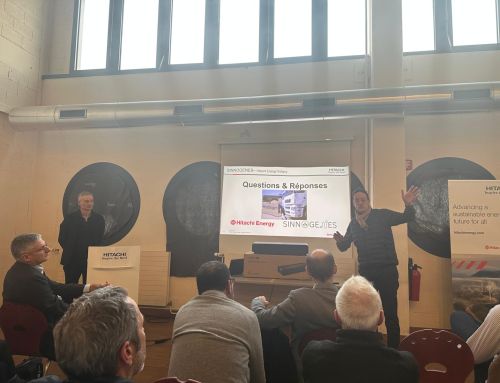
DLR and Sanddorn GmbH presented the Demo #4 decarbonization concept as a best-practice example at the workshop “Energy as the key to food production”, organized by SAENA (Saxony Energy Agency) together with Wirtschaftsförderung Sachsen GmbH. The event brought together companies from the food processing and food service sectors, suppliers, technology providers, energy consultants, and representatives from research — creating a collaborative space for sharing experiences, discussing the latest developments, and generating ideas for future solutions. The SINNOGENES Demo #4 concept was highlighted as a concrete, implemented example of how EU-funded research translates directly into industrial decarbonization. |
This event demonstrated the strong dissemination impact of Demo #4 — not just as a technical project, but as a transferable model for food industry decarbonization across Saxony and beyond.
ECOS Conference — Las Palmas, Spain (June 2023)
At the ECOS Conference held in Las Palmas, Spain (June 2023), the first results of the Demo’s #4 decarbonization efforts were successfully presented, highlighting initial achievements and the potential of the proposed energy system solutions.
SINNOGENES 7th Plenary Meeting — Athens, Greece (March 2026)
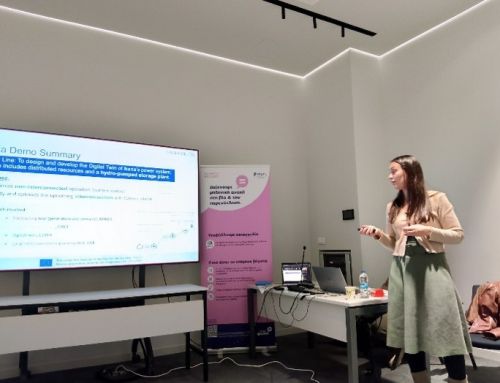
The full SINNOGENES consortium gathered in Athens, hosted by IPTO, for the 7th Plenary Meeting. Demo #4 progress — including initial operational data, CoDeOpT integration status, and March 2026 reduction results — was presented to all project partners. The meeting marked a significant milestone as all five demonstration sites reported real-world operational data for the first time.
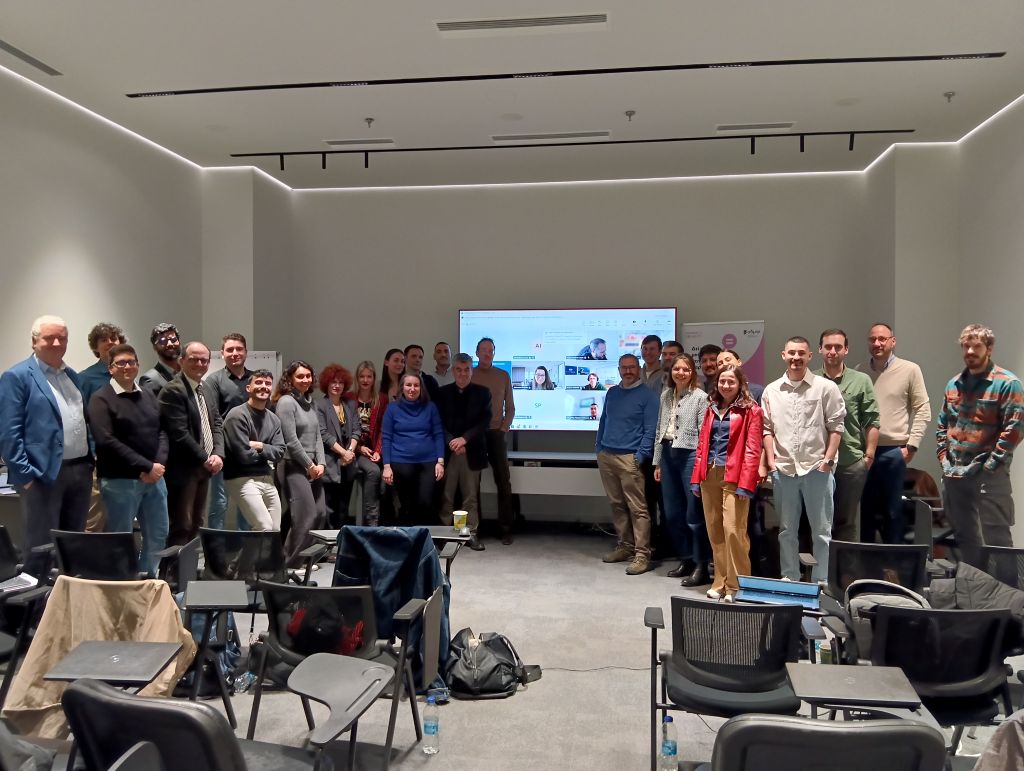
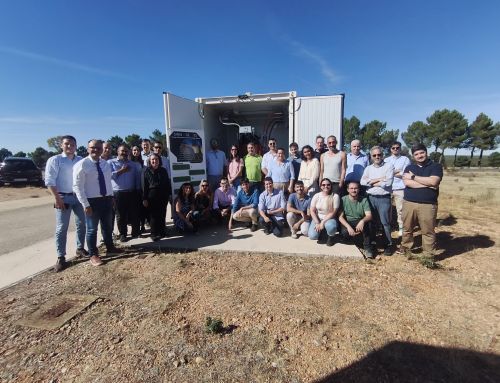
Group photo in 7th plenary meeting in Athens, Greece
Asset Integration & Commissioning Milestones
- STC system fully installed on south-facing facades of Sanddorn GmbH
- Three 10,000 L stratified TES units integrated with STC and HP
- 194 kW Viessmann heat pump installed and brought into operation
- SINNO-Middleware connection established — CoDeOpT transmitting setpoints online
- Heat supply system successfully converted from steam-based to hot-water operation
- PV extension (222 kWp) and Li-ion battery (216 kWh) currently in commissioning phase with regional funding support
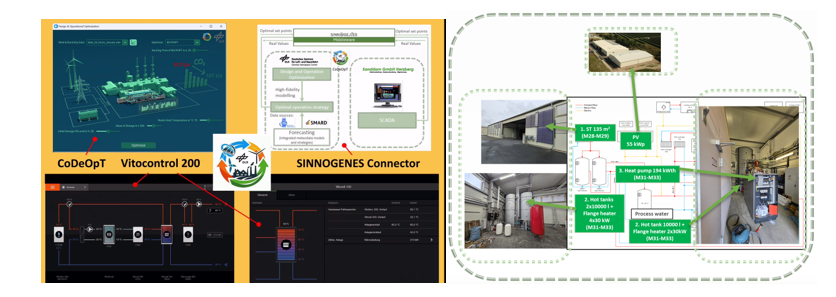
SINNO-Middleware connection (left) and integration of energy components (right)
SUCCESS STORIES & REAL-WORLD IMPACT
From 13.82% to 100% Renewables: A Real Industrial Transformation
The most striking result of Demo #4 is the magnitude of the energy transition achieved at Sanddorn GmbH. Before SINNOGENES, the plant sourced barely 14 % of its energy from renewables. The new integrated system — operating in real production conditions — has demonstrated 81 % reduction in just its first operational month (March 2026), already approaching the modelled target of 87.6 %. As the gas boiler backup is phased out in the coming weeks, the system is expected to reach close to 100 % renewable operation.
| Impact in Numbers
194 kW heat pump replacing fossil boiler • 155 m² solar thermal on building facades • 3 × 10,000 L thermal storage • 222 kWp total PV • 216 kWh battery • 81 % reduction already measured • 46,810 €/year energy cost savings expected |
CoDeOpT: Turning Optimization Research into Industrial Reality
A core success of Demo #4 is the deployment of CoDeOpT — an in-house DLR tool developed specifically within the SINNOGENES project — in a live industrial environment. CoDeOpT uses day-ahead renewable forecasts and demand profiles to compute optimal dispatch setpoints for the entire energy system. These are automatically delivered to Sanddorn GmbH’s Vitocontrol 200 control system via the SINNO-Middleware, enabling fully automated, near-zero-emission operation with minimal manual intervention. This is a significant step from research tool to operational technology.
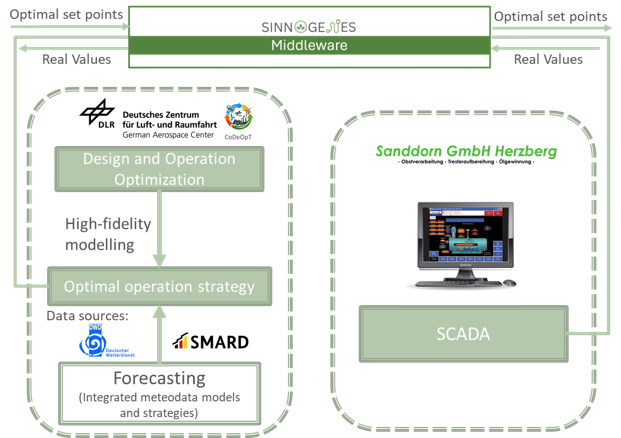
CoDeOpT data-exchange with system operator (Sanddorn GmbH)
SCALING TO REGIONAL INDUSTRIES — HLUC7
Building on the Sanddorn GmbH case, Demo #4 also investigates decarbonization pathways for three other industrial sectors in Germany under High Level Use Case 7 (HLUC7). The CoDeOpT tool was applied to each sector using real energy demand data, and scenarios were simulated for 2024, 2030, 2040, and 2050.
| Metric | Paper Machine | Bakery | Aluminium Production |
| Reference Cost | 9,900,000 €/yr | 210,760 €/yr | 171,950 €/yr |
| Reduction (2024) | 62 % | 98 % | 32 % |
| Cost Savings (KPI-7.1) | 432,152 €/yr (4.4 %) | 89,152 €/yr (42.3 %) | 102,152 €/yr (59.4 %) |
| by 2030 | 66 % | 99 % | 34 % |
| by 2050 | 85 % | 100 % | 51 % |
These results highlight the scalability of the SINNOGENES approach: the methodology and tools developed at Sanddorn GmbH can be directly applied to inform decarbonization strategies across diverse German industries, accelerating the transition away from fossil energy at sector level.
PUBLICATIONS BY DLR UNDER SINNOGENES
DLR researchers have published and presented several scientific contributions within the SINNOGENES framework, directly grounded in the Demo #4 work at Sanddorn GmbH:
- Kyriakidis, Loukas, Kansara, R., & Roldán Serrano, M. I. (2025). Energy management of industrial energy systems via rolling horizon and hybrid optimization: A real-plant application in Germany. Energies, 18(15), 3977. [Link]
- Kansara, R., Kyriakidis, Loukas, & Roldán Serrano, M. I. (2025). Robust Quantum-Assisted Discrete Design of Industrial Smart Energy Utility Systems with Long-Term Operational Uncertainties: A Case Study of a Food and Cosmetic Industry in Germany. Energies, 18(16), 4258. [Link]
- Kansara, R. & Roldán Serrano, M. I. (2024). Coupled Design and Operation Optimization for Decarbonization of Industrial Energy Systems Using an Open-Source In-House Tool. Eng, 5(7), 3033–3048. [Link]
- Roldán Serrano, M. I., & Kansara, R. (2024). Optimal energy concept for decarbonisation of sea-buckthorn processing plants. Renewable Energy and Power Quality Journal, 22(2), 33-38. [Link]
- Lockan, M., & Kansara, R. (2024). Robust optimization of the energy concept of an industrial process w.r.t. uncertain energy costs and environmental conditions. Journal of Environmental Management, 370, 122023. [Link]
- Kansara, R., Lockan, M., & Roldán Serrano, M. I. (2024). Combined Physics- and Data-Driven Modeling for the Design and Operation Optimization of an Energy Concept Including a Storage System. Energies, 17(2), 350. [Link]
These publications are available on the SINNOGENES website and Zenodo: sinnogenes.eu/publications/
UPCOMING PLANS & FINAL-PHASE ACTIVITIES
- Complete commissioning of the 222 kWp PV extension and 216 kWh lithium battery
- Full phase-out of gas boiler backup — HP to operate fully independently on renewables
- Collect 4–8 weeks of multi-component operational data for rigorous CoDeOpT validation
- Formal KPI evaluation against all four planned metrics: cost reduction, emissions, storage utilization, and setpoint tracking accuracy
- Finalize HLUC7 reports: decarbonization roadmaps for German paper, bakery, and aluminium industries
- Publication of final Demo #4 results and lessons learned in open-access journals