- Demo overview: objectives and scope
Demo 3 in Huesca showcases how SINNOGENES is bringing together renewable energy, hydrogen storage, predictive analytics and digital optimisation in a real operational environment at Walqa Technology Park. The demo is centred on the SINNOGREENS tool, a modular SaaS platform designed to optimise renewable energy management through hydrogen storage, multi-asset optimisation, forecasting and blockchain-enabled energy market functionalities to maximize efficiency, flexibility, and transparency in Local Energy Communities.
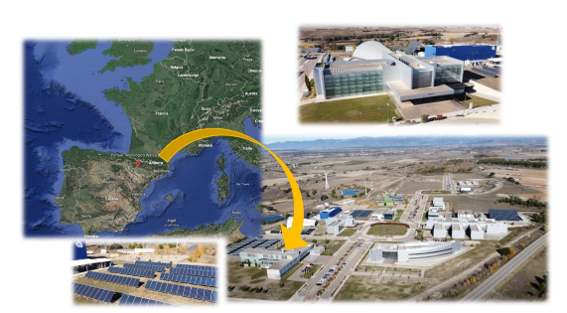
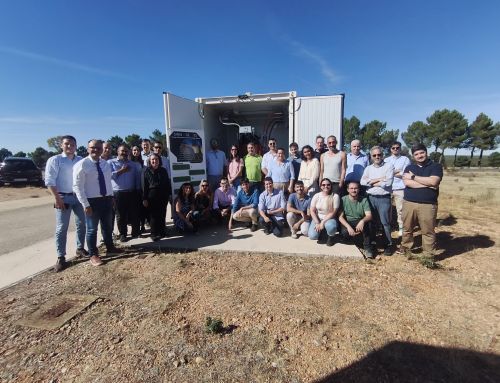
Demo 3 is located at Walqa Technology Park in Huesca, Spain, and demonstrates how innovative storage and digital tools can support cleaner, more flexible and more efficient local energy systems. Its scope combines renewable generation, hydrogen demand, energy management and interoperability between field devices, EMS/SCADA environments and higher-level optimisation modules.
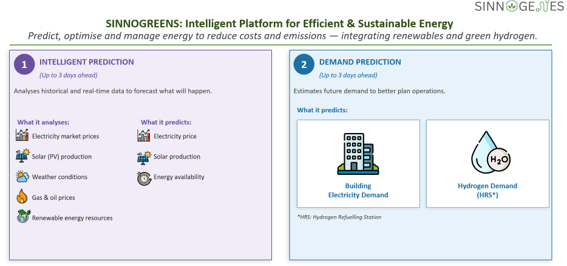
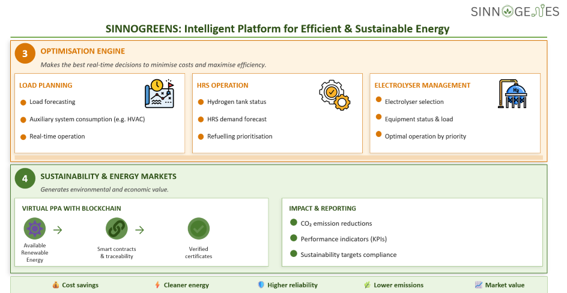
At the core of the demo is the SINNOGREENS platform, which integrates four main capabilities: electricity price and PV production forecasting, electricity and hydrogen demand forecasting, real-time optimisation for load and HRS operation, and a sustainability module based on virtual PPAs, smart contracts and certificates supporting RE100 and local energy market functionalities.
Module 1- Predicts electricity prices and PV production three days in advance
Module 2 – Forecasts energy loads (electrical + H2)
Module 3 – Optimization engine for load management and the operational mode for the HRS (Virtual SCADA)
Module 4 – Sustainability + virtual PPA, featuring smart contracts and certificates warranting RE100 and other local energy markets functionalities
- Key results and achievements to date
The demo has progressed from concept definition to a working pilot environment with upgraded hardware, improved physical infrastructure and integrated digital tools at the Huesca site. Site visits were carried out for sensor and equipment installation, and the systems were fully integrated into the EMS to support coordinated monitoring and operation.
The EMS architecture has been redesigned to become more robust, secure and replicable, and it is now connected to the SINNO Middleware through a dedicated connector. All modules are integrated into the platform and visualised through the 3D EMS, while real-time data from the pilot site is stored in a dedicated MySQL database that feeds dashboards, historical analysis and optimisation modules.
Several technical advances are already in place. Module 1 and Module 2 are integrated and running, sending data to the optimisation engine, including electricity market inputs, PV production forecasts up to three days ahead, and hydrogen demand forecasts, Module 3 the core engine (virtual SCADA) and Module 4 has also been implemented in an operational environment to simulate a local renewable energy exchange market using blockchain technology, including bilateral contracts, smart contracts and traceable renewable energy transactions.
These achievements confirm that the SINNOGRENS tool can be deployed in complex environments, combining legacy infrastructure with new digital and flexibility solutions while respecting local constraints and regulatory frameworks.
- Notable activities, events, and milestones
During the reporting period, Demo 3 reached several important milestones in both deployment and validation. These include completion of site characterisation and baseline assessment, commissioning of the SINNOGREENS platform stack at the demo site, integration of Modules 1, 2 and 4, and the continued development of Module 3 for the optimal dispatch of grid-connected electrolysers and hydrogen refuelling station operation.
Relevant hardware and control milestones were also achieved, such as the onsite installation of the PowerLogic HU280 RTU, intuitive configuration of the PowerLogic T500 Light SCADA, full installation of electrolysers, buffer, compressors, cascades and dispensers, and signal monitoring for the HRS350 and HRS700 branches. Comprehensive testing activities for the HLUC5 use case are ongoing between M34 and M40.
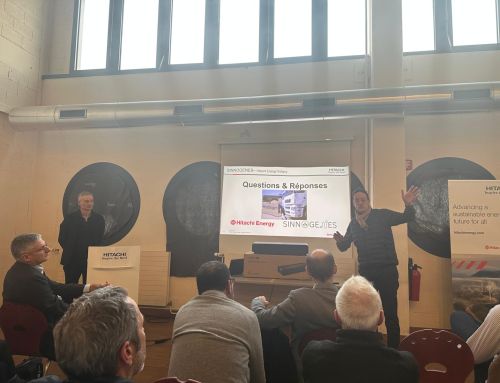
The project was also presented to the Project Officer during the 2nd Review Meeting, where Demo 3 progress, system integration status and use case development were shared as part of the project review and monitoring process.
- Success stories, use cases, and real‑world impact
One of the clearest use cases in Demo 3 is HLUC5, focused on power-to-gas for a local energy community.
In this use case, the SINNOGREENS platform helps predict, optimise and manage energy flows in order to reduce costs and emissions while integrating renewables and hydrogen into daily operation.
The demo combines hydrogen storage and refuelling infrastructure with intelligent software modules. The storage setup includes 11 kg in buffer storage, 23 kg in HRS350 cascade storage and 62 kg in HRS700 cascade storage, providing flexibility for hydrogen-based operation and refuelling scenarios.
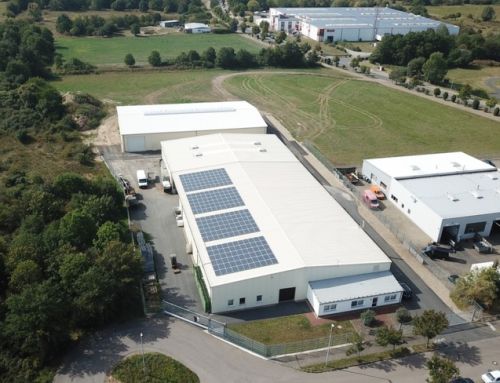
Expected impacts include the addition of 60 kW of PV in self-consumption mode at the demo, an increase in hydrogen storage flexibility, an estimated 40 t CO2 equivalent reduction, and a targeted 10% reduction in the annual electricity bill compared with baseline conditions.
A further real-world benefit is improved decision-making for operators. By combining forecasting, optimisation, SCADA integration and sustainability reporting, the platform supports more informed operational choices, cleaner energy use and stronger visibility of performance indicators and environmental value.
- Visual materials
The demo is supported by a range of visual materials already available in the project dissemination package and presentation set. These include architecture diagrams of the SINNOGREENS platform, screenshots of the EMS and SCADA interfaces, images of the Huesca pilot site, and scheme views of the hydrogen workflow covering electrolyser, buffer, compressor, cascades, dispenser and vehicles.
Additional visual assets show the interaction between forecasting modules, optimisation logic, blockchain-based sustainability functions and field infrastructure, helping external audiences understand both the technical architecture and the practical impact of the demo.
Demo 3 video https://youtu.be/ywLcV3YZ5Gw?si=Ze1G8DU5LPXhDQcb
- Upcoming plans and final‑phase activities
The next phase of Demo 3 will focus on advanced system operation, activation of additional features, comprehensive scenario testing, enhanced data analysis against baseline KPIs, and interoperability validation with the SINNO Middleware.
These activities are planned across the final period and are closely linked to the final demonstration and reporting activities for the Spanish demonstrator.
Future work will also refine operation strategies for the HRS350 and HRS700 systems, including power optimisation logic implemented through the Virtual SCADA and operational strategies linked to the different storage systems. The final phase will quantify KPI performance, document the value of the demo in real operating conditions, and strengthen the case for replication of SINNOGREENS functionalities in other local energy communities and hydrogen-enabled energy systems.
In parallel, the final stage will also contribute to the development of a business model plan for SINNOGREENS, helping define the most promising value propositions, target customers and service models for post-project exploitation. This work will support the future commercialisation of the platform and its modules, with particular focus on scalable applications in local energy communities, renewable-hydrogen infrastructures and other energy environments where flexibility, optimisation and traceability create clear market value.