Demonstrating a Local Hydrogen Mobility Ecosystem
SINNOGENES Demo #6 is implemented in the Canton of Geneva and focuses on the energy optimization of mobility services using hydrogen storage, renewable electricity, and AI-based digital tools. The demo aims to show how hydrogen can support low-carbon public transport and logistics when the full value chain is considered: local renewable electricity generation, hydrogen production, storage, refuelling, vehicle operation, data acquisition, and digital optimization.
The Geneva demo is not limited to testing a single vehicle or a single refuelling station. Its ambition is to demonstrate a local hydrogen ecosystem where energy, mobility, infrastructure, and digital services are connected. By combining the HITACHI–AVIA hydrogen infrastructure, the TPG mobility environment, the University of Geneva’s data acquisition framework, and AI-based services developed by SINNOGENES partners, Demo #6 explores how hydrogen mobility can become operationally feasible, measurable, and scalable.
Objectives and Scope of Demo #6
The main objective of Demo #6 is to validate how hydrogen storage and AI-based services can contribute to cleaner and more efficient mobility operations. The demo focuses on two complementary dimensions.
The first dimension is the energy and infrastructure side, where local photovoltaic production, grid interaction, hydrogen production, compression, storage, and refuelling are considered together. The future HITACHI–AVIA hydrogen plant will support this objective by creating a local renewable-to-hydrogen chain in Geneva.
The second dimension is the mobility and operational side, where vehicle data are collected and used to support driving behaviour optimization, automated refuelling planning, and hydrogen demand modelling. The project therefore connects vehicle operation with the hydrogen supply chain, allowing partners to study how hydrogen availability, refuelling needs, and transport operations interact in real conditions.
AI-Based Services Supporting the Demonstration
SINNOGENES Demo #6 includes three main digital services. The hydrogen production modelling service supports the planning of hydrogen production and storage based on expected demand and available energy resources. The automated refuelling service aims to support operational planning by estimating vehicle energy needs and proposing refuelling schedules. The driving behaviour optimization service analyses vehicle operation and provides insights that can help improve energy efficiency.
These services are intended to support both day-to-day operational decisions and the final evaluation of the demo. They help translate raw operational data into actionable information for transport operators, infrastructure operators, and energy stakeholders.
Vehicle Fleet and Existing Telematics Data Acquisition
A major achievement of Demo #6 has been the deployment of a vehicle data acquisition framework in Geneva. Electric shuttles and reference internal combustion engine (ICE) vehicles have been equipped with Teltonika telematics devices, enabling the collection and transmission of operational vehicle data. This includes mobility, vehicle status, energy-related signals, and contextual data streams required for the AI-based services and later KPI evaluation.
For the electric shuttle fleet, Teltonika FMC650 devices and associated CAN/RS485 interfaces are used to collect data from vehicle networks and additional environmental sensors. For ICE reference vehicles, simpler OBD-based Teltonika devices are used where standard vehicle interfaces are available. This mixed acquisition strategy allows the project to compare different vehicle technologies under real operational conditions and provides a strong baseline for evaluating the hydrogen vehicle once its data stream is fully available.
Hydrogen Shuttle Data Acquisition
One hydrogen shuttle, a PEUGEOT e-EXPERT Hydrogen, has been introduced into the demonstration environment by TPG. This vehicle represents an important step toward validating hydrogen mobility in the Geneva public transport context.
Unlike the electric and ICE vehicles, data acquisition from the hydrogen vehicle has required a dedicated approach. The project partners have worked with the Stellantis ecosystem to enable access to the vehicle data through the dedicated software and connectivity solution. In particular, the current pathway relies on collaboration with Stellacan, a Polish professional vehicle diagnostic solutions developer for Stellantis vehicles, and the use of their software solution to access the vehicle’s hydrogen and electric drivetrain data.
This hydrogen shuttle data stream is important because it will allow the project to validate hydrogen-specific operational indicators, including energy consumption, refuelling needs, and the use of AI-based transport optimization services under real conditions.
OpenRemote Fleet Management Layer
The Geneva demonstrator uses OpenRemote as the operational monitoring and fleet-management layer. OpenRemote is an open-source Internet of Things platform used for professional automation and the management of large fleets of devices. It supports integration of heterogeneous protocols, asset and attribute modelling, dashboards, map-based visualisation, and application-specific user interfaces. In Demo #6, OpenRemote provides the practical operational layer where vehicle positions, telemetry values, and service outputs can be monitored in a unified environment.
For the Geneva pilot, OpenRemote is configured as a fleet-management platform. Vehicle data transmitted by Teltonika devices are received through the communication infrastructure and represented as assets in the OpenRemote environment. This makes it possible to visualise vehicle locations, inspect telemetry values, and later display selected outputs from the AI-based services for each vehicle or plant-related asset.
SINNOGENES Dataspace and Connector Infrastructure
Beyond operational monitoring, Demo #6 also relies on the SINNOGENES data exchange infrastructure. The SINNOGENES connector links the local demonstrator environment with the wider SINNOGENES dataspace and middleware ecosystem. This architecture allows data to be exchanged in a controlled, traceable, and reusable way between local assets, project services, and evaluation workflows.
In practice, the communication chain connects vehicle and plant data sources to OpenRemote, then exposes the required datasets and service inputs/outputs through the SINNOGENES connector. This enables AI services to consume relevant telemetry, generate results, and return outputs to the digital environment. It also supports deferred analysis, dataset generation, and evaluation activities needed for the project’s final reporting.
This infrastructure is important because the demo includes heterogeneous assets: electric shuttles, ICE vehicles, the hydrogen shuttle, the future hydrogen plant, PV data, grid-related data, and eventually hydrogen refuelling information. The connector and dataspace approach ensure that these data sources can be handled consistently, rather than through isolated point-to-point integrations.
HITACHI–AVIA Hydrogen Plant and Refuelling Infrastructure
On the infrastructure side, Demo #6 is progressing toward the deployment of the HITACHI–AVIA hydrogen production, storage, and refuelling facility. The plant is expected to combine local renewable electricity, electrolysis, compression, storage, and dispensing within an integrated local value chain.
The plant will support the use of hydrogen in both public transport and logistics. Once operational, it is expected to refuel the hydrogen shuttle and later support heavy-duty hydrogen trucks from an external transport partner. This will allow the demonstration to extend beyond passenger mobility and address logistics use cases, which are highly relevant for hydrogen because of their high energy demand and need for fast refuelling.
PV, Grid Interaction, and Flexibility Potential
A key feature of the Geneva demo is the connection between renewable electricity production and hydrogen generation. The demo explores how photovoltaic energy, grid electricity, and hydrogen storage can be coordinated to support low-carbon hydrogen production.
The flexibility logic of the demo is based on electricity-to-hydrogen conversion. There is no conversion of hydrogen back into electricity. Instead, flexibility comes from deciding when electricity should be used for hydrogen production, when surplus renewable electricity should be prioritized, and how storage can help match hydrogen production with mobility demand. This creates a practical use case for sector coupling between electricity and transport.
Stakeholder Engagement and Ecosystem Building
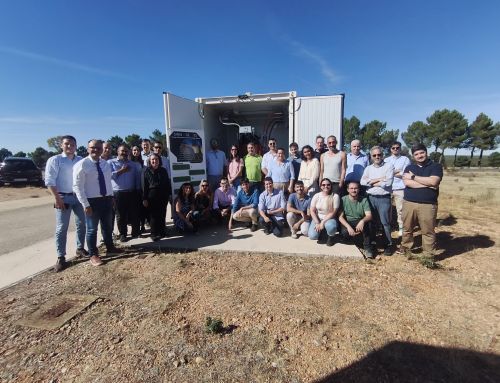
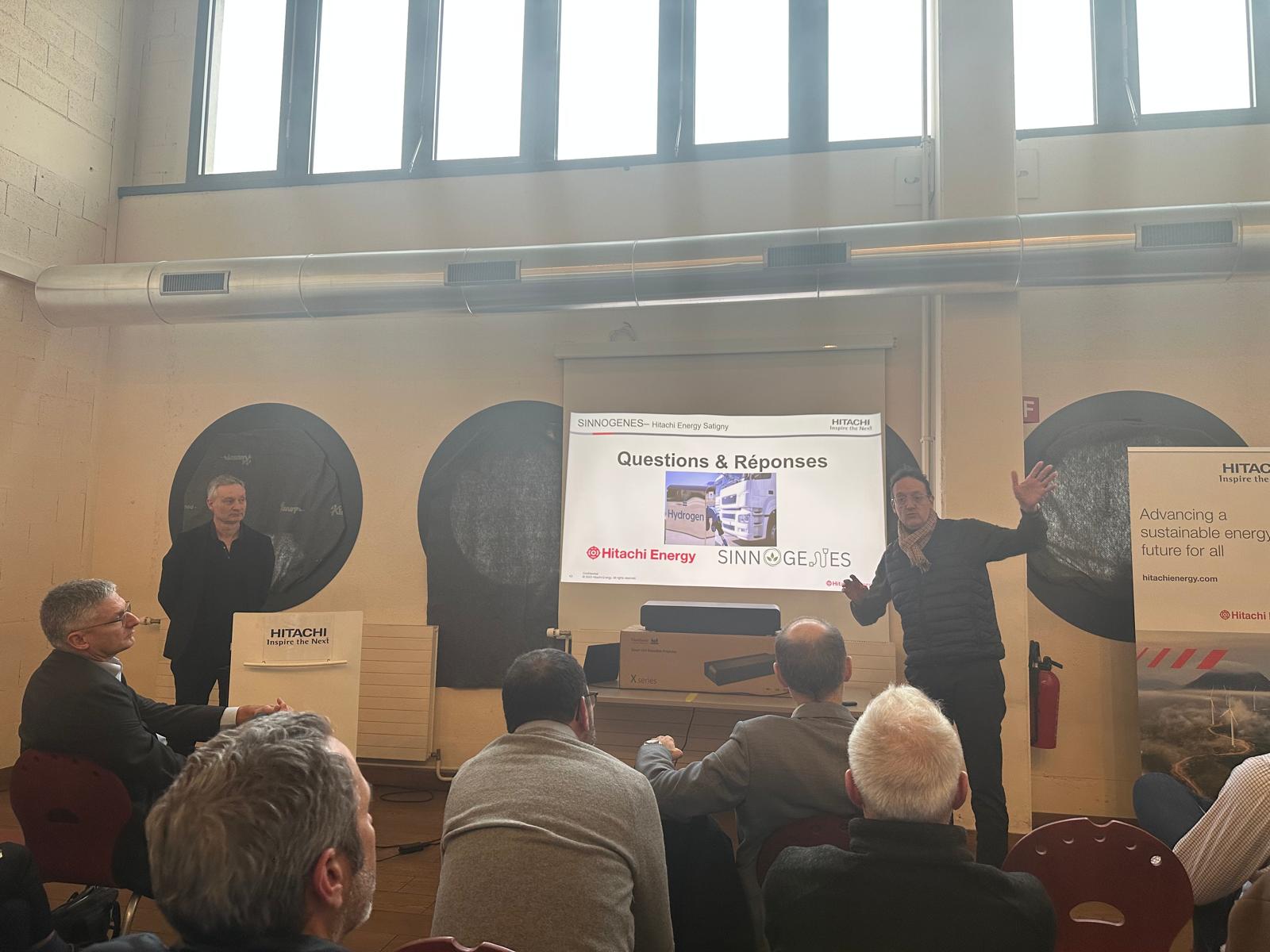
Stakeholder engagement has been a central part of Demo #6. On 17 December 2024, HITACHI Energy hosted a stakeholder meeting at its headquarters. The meeting brought together a broad group of local and regional stakeholders, including representatives from SIG, Romande Energie, État de Genève, Ville de Meyrin, OCT, OCEI, TPG, AVIA, Geneva Airport, Migros Geneva, UniGE, and several industrial and mobility actors.
During the meeting, the SINNOGENES project and its partners were presented, and the consortium outlined the main objectives of the Geneva demo. The discussion focused on hydrogen production from surplus energy, local storage, and distribution within an integrated value chain. Each partner presented its role, highlighting the complementarity of expertise across energy, mobility, infrastructure, research, and public authorities.
The session also enabled early discussions on technical requirements, potential implementation challenges, and the overall roadmap of the demo. This helped ensure alignment between stakeholders and created a shared understanding of the project’s direction.
Alignment with Geneva’s Hydrogen Strategy
Demo #6 benefits from strong alignment with the Canton of Geneva’s interest in hydrogen mobility and local decarbonization. The Canton supports hydrogen initiatives as part of a broader strategy to develop cleaner transport and energy systems. The HITACHI–AVIA hydrogen plant is therefore not only a project asset, but also part of a wider regional ambition to build a local hydrogen ecosystem.
This local support is important because hydrogen mobility requires coordination between public authorities, infrastructure owners, energy providers, vehicle operators, and end users. Demo #6 provides a concrete framework in which these actors can collaborate and test practical solutions.
Key Results and Achievements to Date
Several important results have already been achieved. The electric and ICE reference vehicle fleet has been instrumented, and operational data are being collected using Teltonika telematics devices. The digital data pipeline has been developed to connect vehicle telemetry with OpenRemote and the SINNOGENES data exchange infrastructure. The AI-based transport optimization services have been developed and tested on available vehicle data.
The hydrogen shuttle has been secured and introduced into the demo environment, representing a major step toward real hydrogen vehicle validation. Data acquisition from this vehicle is now being addressed through the Stellacan software route. On the infrastructure side, the hydrogen plant has progressed through important planning, contractual, and permitting steps. Stakeholder engagement has also advanced significantly, with the December 2024 meeting helping to consolidate the local hydrogen ecosystem around the demo.
Real-World Impact and Replicability
The Geneva demo addresses a real challenge faced by many cities and regions: how to introduce hydrogen mobility in a way that is operationally credible, economically meaningful, and connected to local renewable energy. By combining public transport, logistics, refueling infrastructure, PV production, and AI services, Demo #6 creates a model that can be replicated in other urban or regional contexts.
The demo also contributes to better understanding how hydrogen vehicles can be compared with electric and diesel vehicles under real operational conditions. This is important for future decisions on fleet transition, infrastructure investment, and the role of hydrogen in public transport and logistics.
Upcoming Plans and Final-Phase Activities
In the coming phase, partners will focus on completing the hydrogen infrastructure, securing the remaining vehicle and plant data streams, and finalizing the KPI evaluation framework. Updated PV data, hydrogen plant simulation or comparable data, and real-time hydrogen shuttle data will be used to refine the final scenarios and support the evaluation of the AI-based services.
The next phase will also focus on validating the complete chain from energy production to vehicle operation. This includes comparing baseline and optimized scenarios, assessing the contribution of AI services, and documenting the operational lessons learned from the Geneva pilot. The final results will contribute to the SINNOGENES evaluation activities and provide practical guidance for future hydrogen mobility deployments.