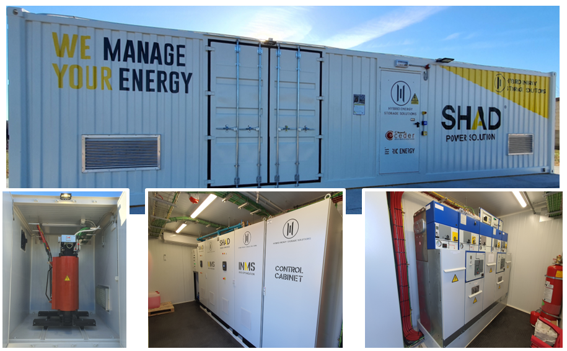
Nestled in the heart of Lubia, the CEDER-CIEMAT center is no longer just a research facility; it has transformed into a living laboratory for the energy transition. As part of the European SINNOGENES project, the Soria Demonstrator (Demo#2) is leading the charge in proving that a 100% renewable future is not just a dream, but a functional reality. By blending cutting-edge “fast” storage with deep-earth geothermal energy, this site is solving two of the biggest puzzles in green energy: how to keep the grid stable during rapid flickers in power and how to heat our buildings without burning carbon.
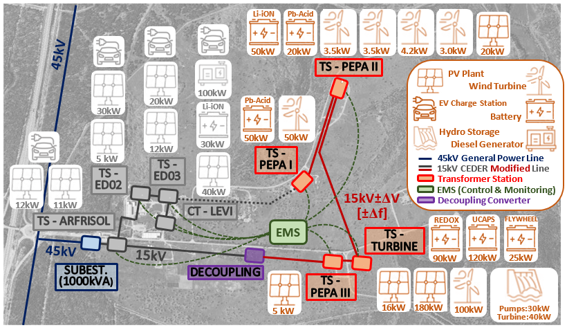
Figure 1 Diagram of the CEDER-CIEMAT experimental microgrid
At the core of Soria’s success is its sophisticated smart microgrid, a state-of-the-art 15 kV network that manages everything from wind turbines to solar plants in real time. To protect this grid from the “jitters” of renewable energy—where a passing cloud or a sudden gust can cause power spikes—the team has installed a “fast-response” powerhouse. This includes a 25 kW flywheel, which stores energy in a high-speed spinning metal wheel, and a 120 kW supercapacitor bank. Working together, these devices can inject or absorb power in less than 10 seconds, acting like a high-tech shock absorber for the electrical grid.
Crucially, the center has also integrated a high-power decoupling converter capable of creating a controlled experimental test grid with fully modifiable properties. Operating at the 15 kV level, this specialized equipment can intentionally induce precise variations in frequency and voltage to generate grid disturbances. By using the “fast-response” systems to stabilize the perturbed network through the converter, the project successfully demonstrates how renewable energy storage can provide critical grid stability services, ensuring network robustness even under volatile conditions.

Nevertheless, the innovation does not stop at electricity. Demo#2 is pioneering a geothermal storage field consisting of several boreholes drilled deep into the ground. The concept is brilliant in its simplicity: during the hot summer months, surplus renewable energy is used to power geothermal pump that extract heat from buildings and send it into the ground. This warmth is stored seasonally in the subsurface, only to be pulled back up to provide carbon-free heating during the freezing Soria winters. This “thermal battery” approach aims to boost heating efficiency by over 10% and significantly reduce the site’s carbon footprint.
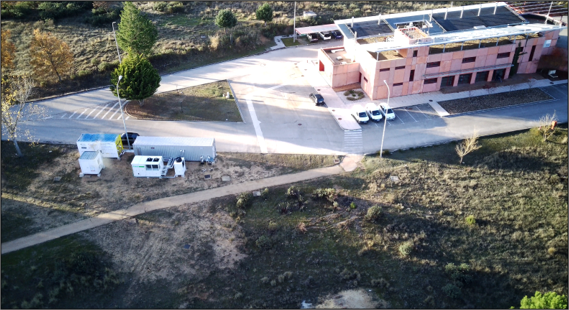
Figure 3 Aerial view of the geothermal system and Arfrisol building.
The results so far are a testament to European collaboration. All physical assets are now fully installed and operational. Behind the scenes, a “digital brain”—the energy management system is now successfully talking to all these components, ensuring they work in perfect harmony. This digital integration even allows for secure data sharing across Europe through the project’s middleware, proving that these local solutions can be scaled and replicated elsewhere.
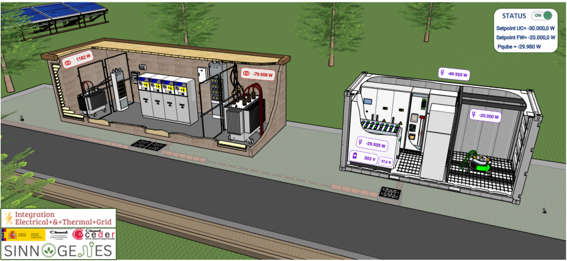
Figure 4 Energy management system – Visualization mode: flywheel and supercapacitor bank
The impact is real and measurable. For the residents and industries involved, the project targets a reduction of over 3% in annual energy bills and a matching 3% drop in CO2 emissions. As the project enters its final phase, the focus shifts to intense experimental trials to fine-tune these systems under every possible weather condition. The Soria demonstrator is not just a pilot; it is a blueprint for the resilient, flexible, and sustainable energy communities of tomorrow.