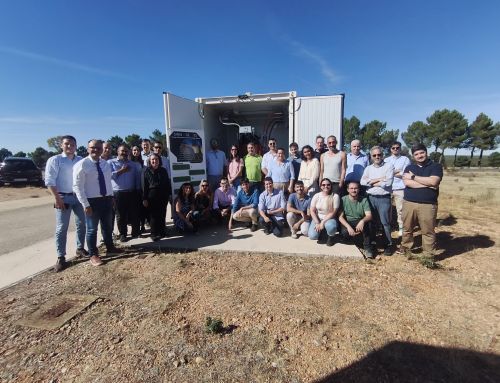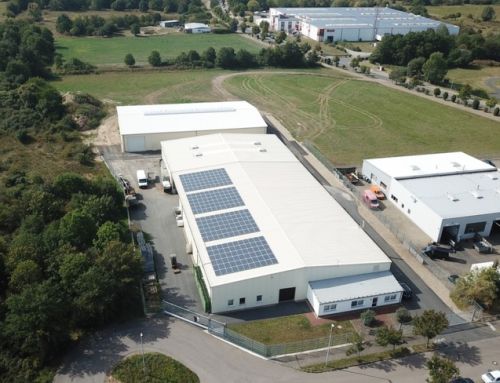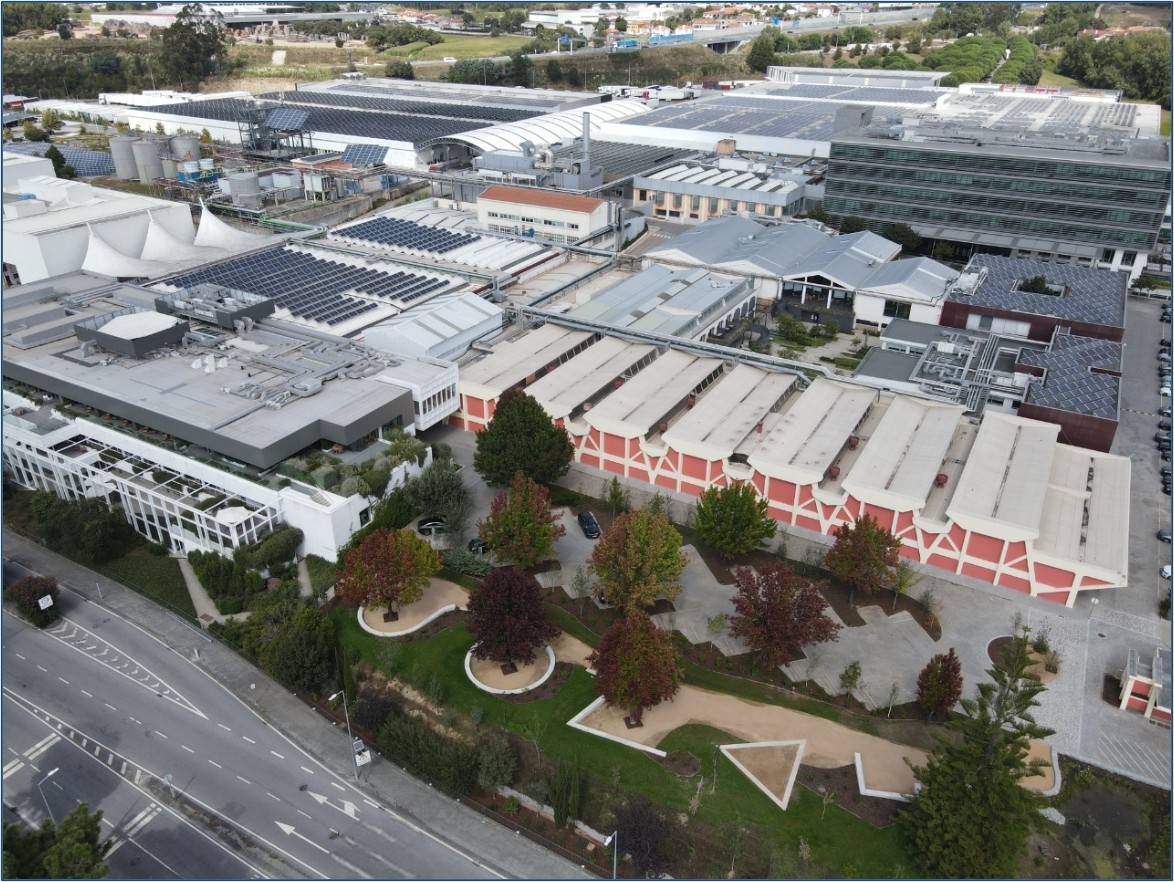
Demo #1 is implemented at the Sonae Campus in Maia and focuses on the coordinated operation of an industrial microgrid integrating photovoltaic generation and electrochemical storage systems, to which SINNOGENES Project adds a thermal energy storage (TES) prototype. The objective is to optimize energy use, increase renewable self‑consumption, reduce energy costs, enhance reliability, and enable the provision of flexibility services to the distribution system operator (DSO).
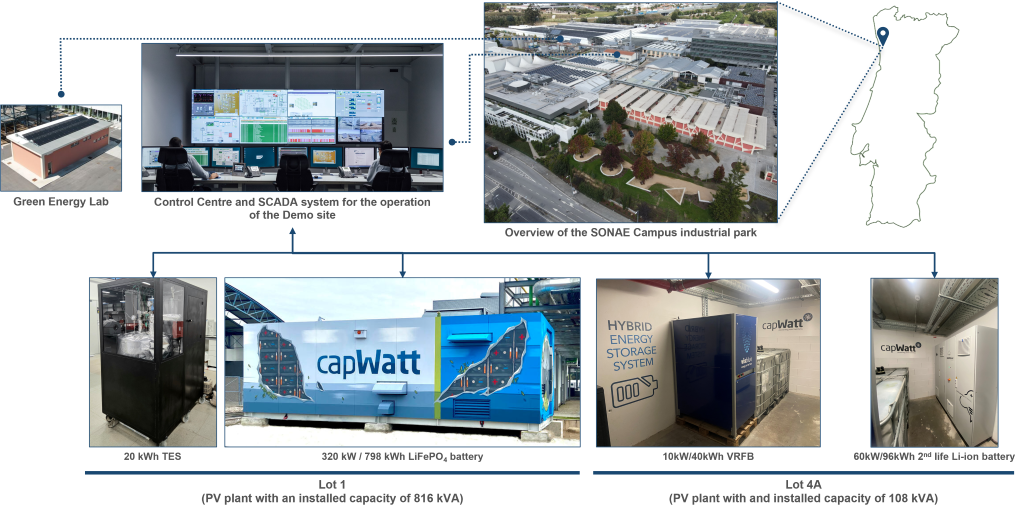
Overview of Demo Site #1 technologies
To achieve this, the demo combines an optimal dispatch software with a dedicated communication and integration layer, enabling automated exchange of setpoints and operational data between control algorithms and on‑site assets. This solution allows storage systems to be operated based on forecast‑driven optimization while ensuring continuous monitoring and feedback.
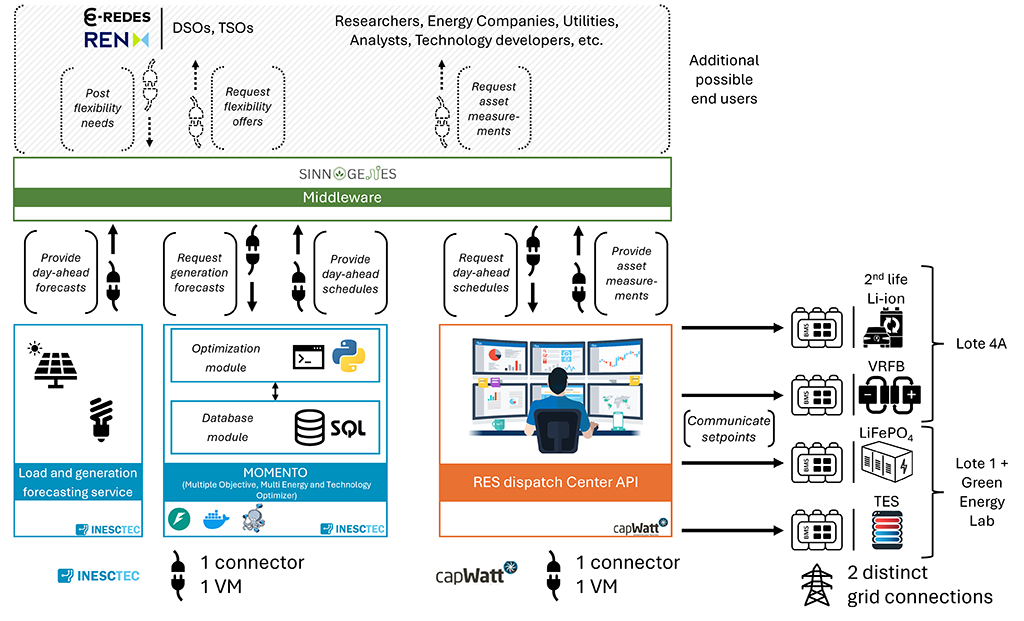
Sinno Toolkit integration diagram for Demo Site #1
In parallel, the demo includes a simulation tool supporting black‑start and islanded operation procedures, which contributes to validating system resilience and operational readiness under critical conditions. The demonstration also prepares the site for participation in flexibility markets (FIRMe framework), where the microgrid will be assessed for its capability to deliver reserve services to the DSO.
Key results and achievements
- Successful demonstration of industrial microgrid resilience, including a full black‑start and islanded‑operation procedure, where the electrochemical storage system actively supported conventional CHP generation by sharing load and enabling stable operation under grid‑loss conditions
- Deployment of daily optimized energy management, improving the use of locally generated renewable energy and reducing reliance on grid electricity. This is supported by a modular control and integration architecture combining optimization software and communication interfaces to progressively automate microgrid operation
- Development and validation of the Thermal Energy Storage (TES) prototype, which has achieved TRL 6 and is being integrated at the Green Energy Lab (GEL). The TES converts electrical energy (from PV or the grid) into stored heat, supplying the building’s heating demand, partially replacing conventional HVAC systems, and enabling progression toward TRL 7
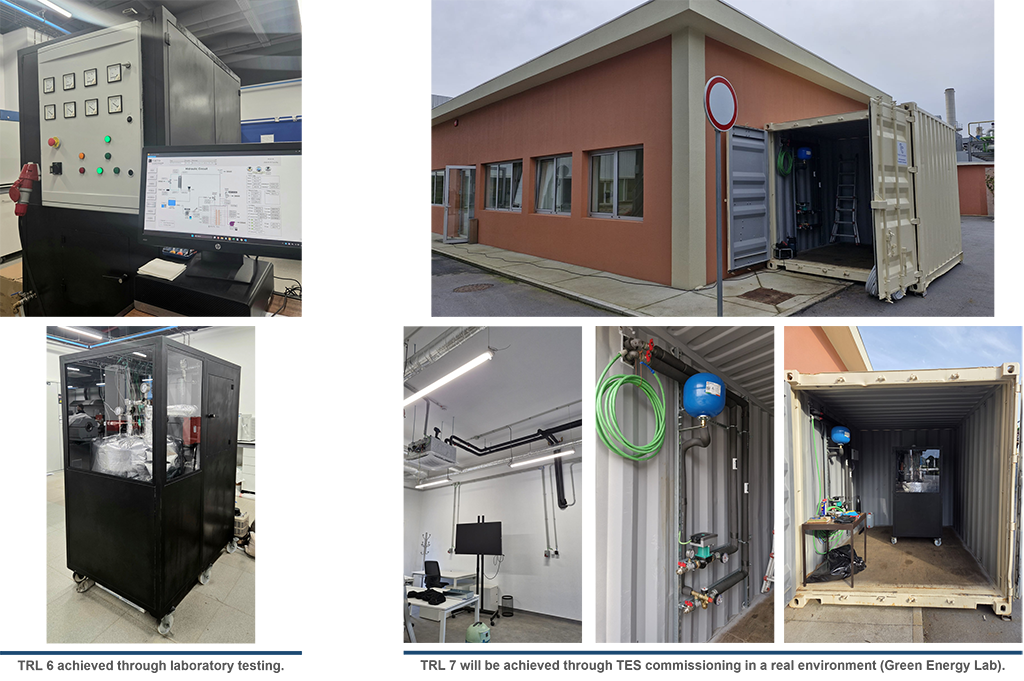
A novel TES prototype was developed by FEUP, leading to a patent submission
Notable activities and milestones
- Execution of the black‑start and islanded‑operation procedure, demonstrating coordinated operation where the storage system supported conventional CHP generation and ensured stable load supply
- Deployment of a modular control and integration architecture, enabling progressive automation of dispatch and monitoring across heterogeneous assets
- Implementation of daily optimized dispatch routines, allowing continuous operation of the microgrid under real‑world conditions
- Completion of the TES prototype manufacturing and laboratory validation, reaching TRL 6 and preparing for on‑site integration at the Green Energy Lab
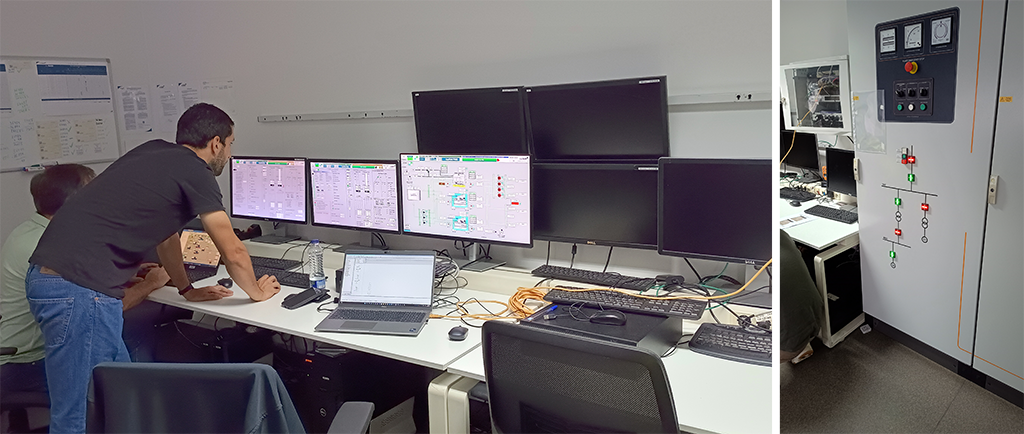
For the first time at SONAE Campus, a successful black start and islanding operation was achieved using a CHP unit supported by an energy storage system
Use case / real‑world impact
Demo #1 demonstrates how existing industrial sites can integrate advanced energy‑management tools and storage technologies through a staged and practical approach, without requiring major infrastructure changes. The pilot shows how optimized dispatch and coordinated control can improve the use of locally generated renewable energy, reduce reliance on grid electricity, and enhance operational efficiency.
At the same time, the demonstration confirms the ability of industrial microgrids to maintain critical operations during grid disturbances, strengthening energy resilience. With the ongoing integration of the Thermal Energy Storage system and readiness for participation in flexibility services, the demo illustrates a scalable pathway toward more flexible, efficient, and resilient industrial energy systems.
Upcoming activities
- Final installation and commissioning of the TES at the Green Energy Lab
- Full integration of the interface platform for automated dispatch
- Validation of flexibility‑service provision under the FIRMe framework (DSO interaction)
- Extension of KPI assessment to include additional assets (Lot 4A, TES)
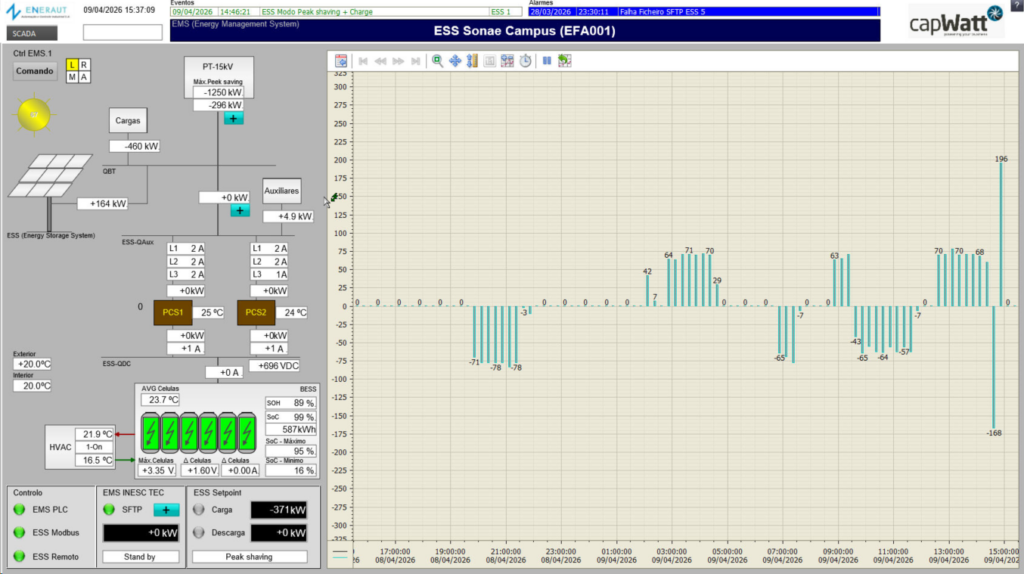
Interface platform showcasing automated operation of the LiFePO4 storage system